Tag Archives: african genomics


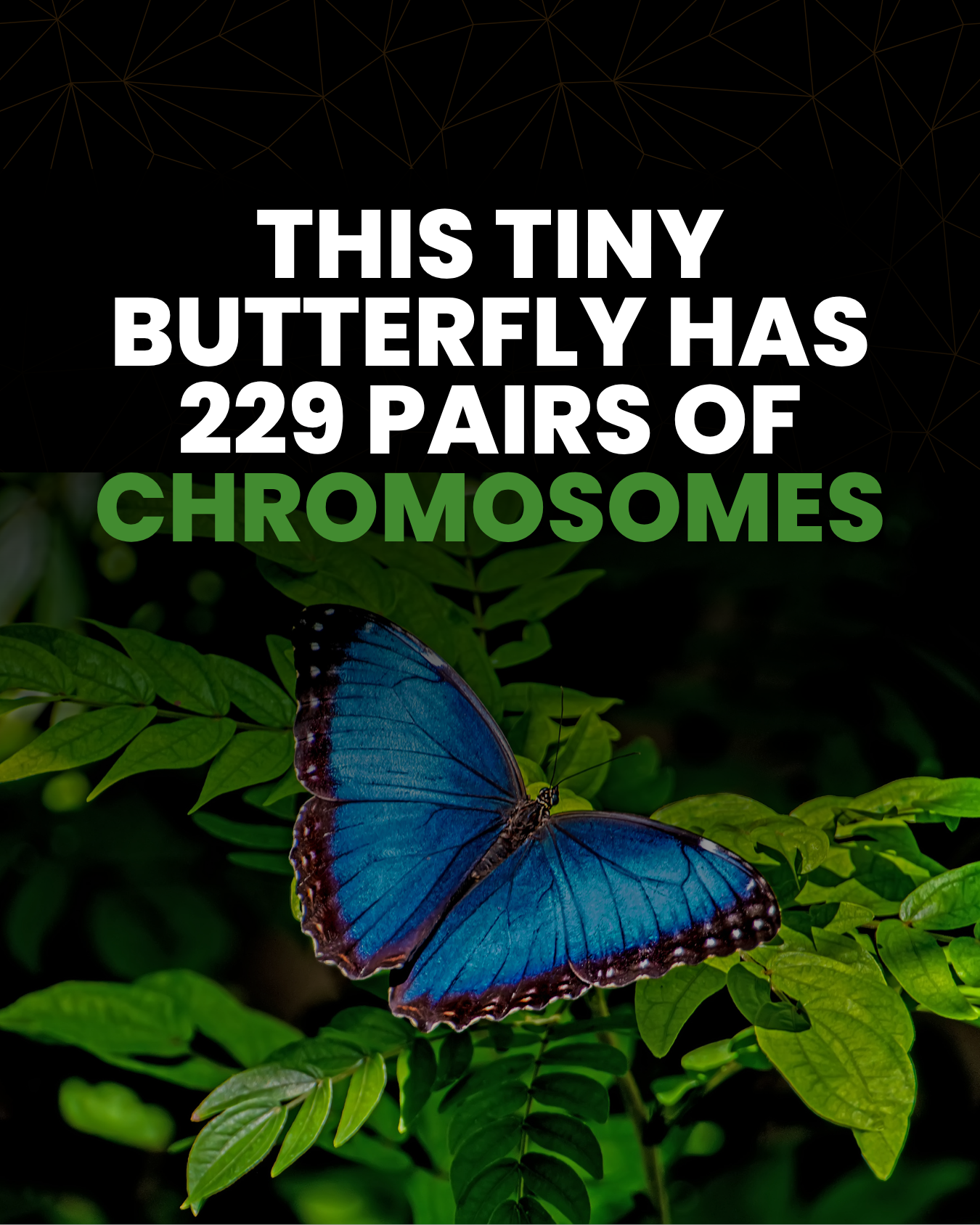
A tiny butterfly from North Africa is helping scientists understand just how dramatically a genome can change.


When we think about chromosomes, humans usually come to mind: 23 pairs of chromosomes in each typical human cell. But the Atlas blue butterfly (Polyommatus atlantica) operates on a very different genomic scale.


Researchers from the Wellcome Sanger Institute and the Institute of Evolutionary Biology (IBE-CSIC-UPF) have confirmed that this elusive butterfly has 229 pairs of chromosomes, the highest chromosome number recorded in a non-polyploid multicellular animal. The discovery was made possible through the first chromosome-level genome sequencing of the species and was published in Current Biology in 2025.


A butterfly with an extraordinary genome


The Atlas blue butterfly is found in the mountain ranges of Morocco and northeastern Algeria. Although scientists had suspected that the species possessed an unusually high chromosome count, genomic sequencing provided the evidence needed to confirm it.


Its closest relatives typically have around 23 or 24 chromosome pairs. So how did this small butterfly end up with 229?


The answer appears to be chromosome fission.


Rather than duplicating its entire genome, the butterfly's ancestral chromosomes were progressively broken into smaller chromosomes. Researchers estimate that the number increased from around 24 ancestral autosomes to the current 227 pairs of autosomes over approximately three million years. The species also has four sex chromosomes.


Interestingly, the chromosome breaks occurred predominantly in regions where DNA is more loosely packed. The researchers also found internal telomeric sequences that may provide clues about how these chromosome breaks occurred and remained viable through evolution.


More chromosomes don't mean a more complex organism


This discovery offers an important reminder: chromosome number does not determine how complex an organism is.


Humans have 23 chromosome pairs. The Atlas blue butterfly has 229. Yet that doesn't make the butterfly “more advanced” genetically.


What matters is how genetic information is organised, regulated and expressed.


This is one reason genome sequencing is so powerful. Researchers aren't simply counting chromosomes. By producing a chromosome-level reference genome, they can investigate how DNA is structured and how that structure has changed over evolutionary time.


What does this have to do with cancer research?


There is an interesting, but still developing, connection.


Chromosome rearrangements are also observed in human cancer cells, where changes to chromosome structure can contribute to genomic instability. The researchers behind the butterfly study have suggested that understanding how extensive chromosome rearrangement can occur while remaining viable could potentially contribute to future cancer research.


However, this does not mean the butterfly has provided a cancer treatment or that its genome directly translates into a new therapy. The immediate significance of the research is in understanding chromosome evolution and genome organisation.


Why genomic sequencing matters for Africa


Perhaps the most important lesson is broader than butterflies.


Every species carries a genomic history. Sequencing allows scientists to investigate that history in unprecedented detail, from evolution and adaptation to disease, conservation and biological diversity.


This is particularly important for Africa.


Africa contains the greatest human genetic diversity in the world, yet African populations remain underrepresented in many global genomic datasets. Building better genomic resources therefore requires more African samples, more sequencing and more research that reflects the continent's diversity.


The Atlas blue butterfly study demonstrates what becomes possible when scientists invest in sequencing organisms whose genomes have previously been poorly understood.


At MyAfroDNA, we believe the same principle applies to African genomic diversity.


The more African genomes we study, the more we can understand the genetic variation, histories and biological diversity that make the continent so important to genomics.


The bigger picture


The Atlas blue butterfly may be tiny, but its genome is giving scientists a much bigger question to explore:


How much can a genome change while an organism continues to survive and evolve?


From chromosome rearrangements in butterflies to genetic diversity across African populations, genome sequencing is helping us answer questions that were once impossible to investigate.


And that is the power of genomics: DNA doesn't just tell us what an organism is. It can tell us where it came from, how it changed and, potentially, where it is going.


Source


Wright, C. J. et al. (2025). Constraints on chromosome evolution revealed by the 229 chromosome pairs of the Atlas blue butterfly. Current Biology, 35, 4727–4742.e7.
A recent feature in Nature Africa highlights Tanzania’s remarkable progress in its decades-long battle against neglected tropical diseases (NTDs). Through coordinated mass drug administration, targeted surveillance, and strong community participation, the country has achieved a more than 75% reduction in key NTD infections, including lymphatic filariasis, trachoma, schistosomiasis and onchocerciasis.


This public-health milestone did not happen overnight. It is the result of consistent government investment, cross-sector partnerships, and the active involvement of local health workers who understand the unique cultural and environmental contexts of their communities. Village volunteers have played a crucial role in distributing medicines, tracking cases and ensuring that interventions reach even the most remote populations.The article also highlights that Tanzania’s approach is adaptable. For example, as prevalence levels dropped, the country shifted from broad mass treatment campaigns to more precise surveillance systems, using community data to identify hotspots and allocate resources more efficiently.


This transition demonstrates the power of combining field-driven insights with data-led public-health decision-making.For a company like MyAfroDNA, Tanzania’s progress offers a compelling model for African-led health innovation. It reinforces an essential truth: African health systems are not passive recipients of external interventions. They are active, evidence-driven and capable of delivering measurable, population-level impact when local leadership is centred.These lessons are highly relevant to our molecular-testing, biobanking and biospecimen work.


Sustainable impact in genomics requires:partnerships that elevate community expertise,programmes built on local context rather than imported assumptions, andlong-term models that integrate scientific data with lived realities.Tanzania’s success in reducing NTD burdens is more than a public-health victory. It illustrates what becomes possible when data, community participation and local ownership intersect. As MyAfroDNA advances its African-centred genomics agenda, this achievement reminds us of the responsibility — and opportunity — in supporting African science, strengthening community-driven systems and amplifying homegrown impact.


Read the full article here


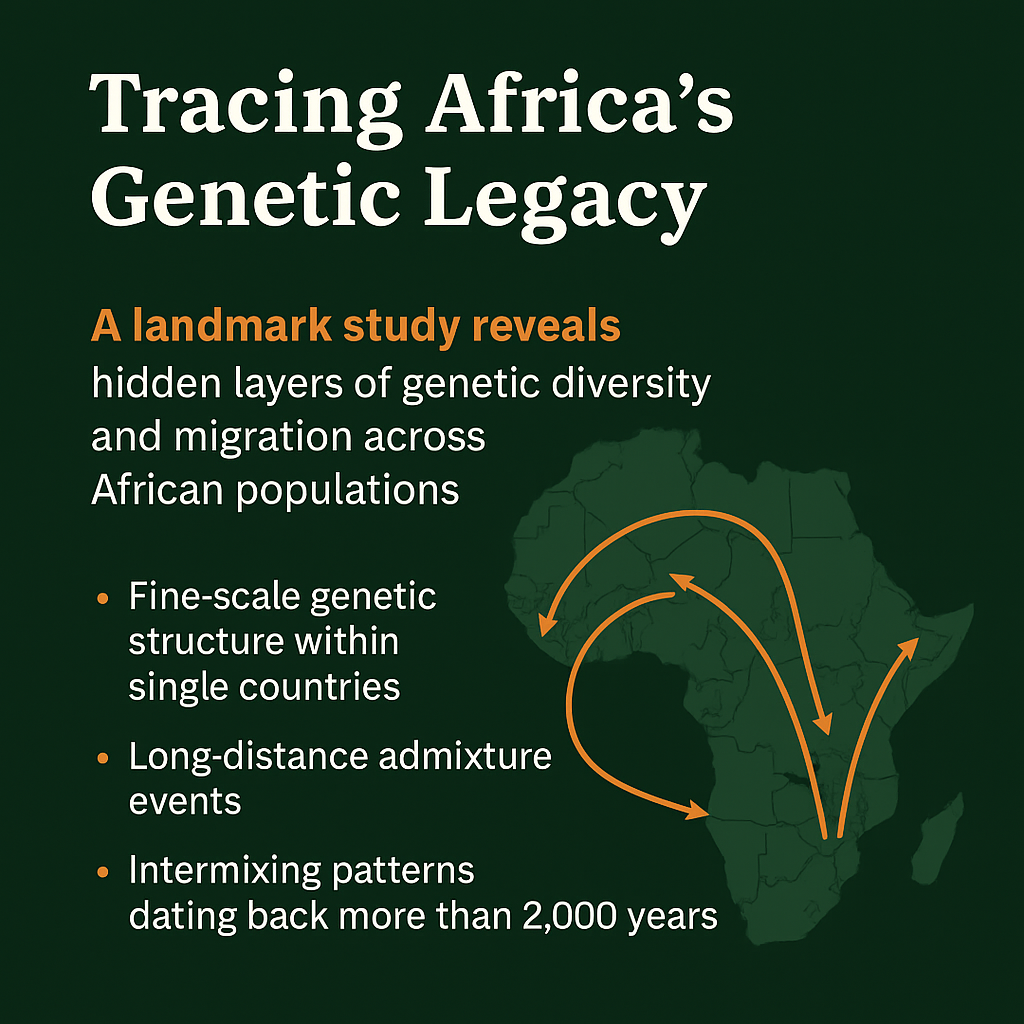
A landmark study led by researchers from University College London (UCL) and published in Science Advances reveals a previously hidden depth of genetic diversity, migration, and admixture within African populations. Titled “Dense sampling of ethnic groups within African countries reveals fine-scale genetic structure and extensive historical admixture,” the research analysed 1,333 genomes from over 150 ethnic groups across Cameroon, Ghana, Nigeria, Sudan, and the Republic of the Congo.


The findings challenge the often simplistic narratives about African genetic history. The study uncovered fine-scale genetic structure within single countries, showing that even neighbouring ethnic groups may carry distinct ancestral lineages. For instance, western Cameroonian groups exhibit unique ancestry signatures reflecting the region’s long history of local kingdoms and cultural interactions.


Researchers also traced long-distance admixture events, linking populations in northern Cameroon and Sudan with distant groups, suggesting centuries of movement through trade, migration, and empire expansion. In Ghana and Nigeria, they detected intermixing patterns dating back more than 2,000 years, likely connected to shifts in climate and vegetation that encouraged population mobility and contact.


Beyond uncovering these complex patterns, the study highlights an essential truth: Africa’s genomic diversity cannot be fully understood through limited or external data. It underscores the urgency of expanding and diversifying African genomic datasets to ensure equitable representation in global genetics research.


For MyAfroDNA, this research reaffirms our mission to strengthen African-centric molecular testing and biospecimen sourcing for both research and precision medicine. Understanding these fine-scale patterns helps scientists interpret genetic variation more accurately, improving ancestry insights and health-related findings for African communities.


As Africa continues to shape the global genomic landscape, studies like this remind us that every region, community, and ancestry carries its own genetic legacy, one that deserves to be studied, respected, and represented on its own terms.


Read the full research here.


Antimicrobial resistance (AMR) poses a major threat to global health, and Africa is no exception. As pathogens evolve, our ability to treat common infections is becoming increasingly limited.


A new study published in Scientific Reports provides valuable insight into the genetic basis of AMR in Africa, focusing on Staphylococcus aureus, one of the most widespread and clinically significant bacteria.What the Study FoundResearchers analyzed 95 whole genomes of S. aureus collected from 11 African countries. The majority of these samples were human-derived, taken from blood, pus, urine, and wound sites.


Through bioinformatic analysis, they identified 33 antimicrobial resistance genes.Key findings include:Efflux pump mechanisms were the dominant form of resistance, allowing bacteria to actively expel antibiotics.Other resistance strategies included enzyme-mediated inactivation, target alteration, protection, and replacement.West and East Africa emerged as hotspots for the distribution of resistance genes, signaling the need for stronger surveillance in these regions.


These findings highlight the urgent need to expand genomic surveillance systems across the continent. Despite covering 11 countries, the study was limited by small sample sizes and lack of data from many African nations. This gap emphasizes the importance of building local capacity for sequencing, data analysis, and sample collection.For African health systems, this research serves as a reminder that combating AMR requires both global collaboration and homegrown solutions. Without comprehensive genomic data, it will be difficult to design effective treatment guidelines, track the spread of resistance, or prepare for future outbreaks.


At MyAfroDNA, we believe genomic research should be powered by African data, African expertise, and African innovation. Our mission is to provide high-quality biospecimens and molecular testing services that enable researchers to generate the insights needed to safeguard public health.AMR is a collective challenge, but with better data and stronger collaboration, Africa can take the lead in finding solutions.


Read the full publication here: https://www.nature.com/articles/s41598-025-01398-0


A groundbreaking study published in Nature Communications has revealed novel genetic variants associated with carotid intima-media thickness (cIMT), a key marker of early atherosclerosis, among nearly 8,000 adults from sub-Saharan Africa. The research, part of the AWI-Gen project, included participants from Burkina Faso, Ghana, Kenya, and South Africa and marks one of the largest genome-wide association studies (GWAS) on cardiovascular risk in African populations.


Two previously unidentified loci, SIRPA and FBXL17, were found to be significantly associated with cIMT, offering new insight into biological pathways involved in vascular health. Notably, the study also identified sex-specific genetic signals: SNX29 in men, and LARP6 and PROK1 in women, the latter two being enriched for estrogen response genes. These findings suggest different genetic mechanisms for cardiovascular risk between men and women.


Many of the variants identified in this African cohort are either rare or absent in European populations, emphasizing the critical need for diversity in genomic research. This study not only deepens our understanding of cardiovascular disease in African communities but also underscores the importance of building inclusive datasets to drive precision medicine. At MyAfroDNA, we champion this kind of Africa-led genomic science.


Read more on this research here: https://www.nature.com/articles/s41467-022-28276-x