Author Archives: Admin


Expecting a baby? Looking for ways to learn more about your baby's chromosomal health during pregnancy? MyAfroDNA now offers Rapid Prenatal Aneuploidy Testing, a non-invasive genetic screening service designed to help expectant mothers and healthcare providers gain early insights into selected chromosomal conditions.Pregnancy comes with many questions, and having access to relevant health information can make a difference in how expectant parents and their healthcare providers navigate the journey.Advances in genetic science have made it possible to screen for certain chromosomal abnormalities during pregnancy without invasive procedures.


One such development is Non-Invasive Prenatal Testing (NIPT). At MyAfroDNA, we are making this technology more accessible through our Rapid Aneuploidy Testing service, providing expectant mothers and healthcare facilities in Nigeria with access to specialised prenatal genetic screening.With a simple blood sample from the mother and results available within seven days, the service offers an additional source of genetic information to support informed conversations and pregnancy care.What Is Rapid Aneuploidy Testing?Aneuploidy occurs when a cell has an abnormal number of chromosomes. Some chromosomal abnormalities can affect a baby's development and are associated with genetic conditions.


MyAfroDNA's Rapid Aneuploidy Testing uses Non-Invasive Prenatal Testing (NIPT), which analyses cell-free DNA circulating in the mother's bloodstream to screen for selected chromosomal abnormalities in the developing baby.Unlike invasive prenatal diagnostic procedures, NIPT requires a blood sample from the pregnant mother.


The test screens for:


- Trisomy 21 (Down syndrome): A chromosomal condition caused by an additional copy of chromosome 21.


- Trisomy 18 (Edwards syndrome): A condition associated with an additional copy of chromosome 18.


- Trisomy 13 (Patau syndrome): A condition associated with an additional copy of chromosome 13.


- Sex chromosome abnormalities: Including conditions such as Turner syndrome.NIPT is a screening test, not a diagnostic test. It estimates the likelihood of selected chromosomal conditions but cannot confirm whether a baby has a particular condition. A high-risk result should be discussed with a qualified healthcare professional, who may recommend further diagnostic testing.


Why Consider Prenatal Aneuploidy Testing?


For expectant mothers, prenatal genetic screening can provide additional information about a developing baby's chromosomal health. MyAfroDNA's Rapid Aneuploidy Testing offers:


1. Non-invasive sample collection. The test requires a blood sample from the pregnant mother, avoiding the need for an invasive procedure to obtain the sample for screening.


2. Early genetic insightsScreening can provide information about the likelihood of selected chromosomal abnormalities during pregnancy.


3. Timely resultsMyAfroDNA offers a turnaround time of approximately seven days, subject to sample acceptance and applicable assay requirements.


4. Support for informed decisionsThe results can help expectant mothers and their healthcare providers determine appropriate next steps in pregnancy care.


5. Expert supportOur team provides guidance throughout the testing process.For Expectant Mothers: How to Access the TestYou do not have to navigate the process alone. MyAfroDNA works with healthcare providers to make prenatal aneuploidy screening accessible through a straightforward referral and sample collection process.


Here is how it works:


1. Contact MyAfroDNA: Express your interest in prenatal aneuploidy testing.


2. Get referred to a partner clinic: Our team will guide you to a participating healthcare facility.


3. Sample collection: A blood sample is collected at the partner clinic.


4. Laboratory analysis: Your sample is sent to MyAfroDNA for processing and analysis.


5. Receive your results: Results are made available within approximately seven days, subject to applicable testing requirements.Interested in getting tested? Contact MyAfroDNA to enquire about the service, available partner clinics and how to book your test. Email: info@myafrodna.com


Are you a Healthcare Providers? Partner with MyAfroDNA for Rapid Aneuploidy Testing


We recognise that obstetricians, gynaecologists, fertility specialists, IVF clinics and other reproductive healthcare professionals play an important role in helping expectant mothers access appropriate prenatal screening. MyAfroDNA is inviting healthcare providers and reproductive health facilities across Nigeria to explore partnership opportunities for Rapid Aneuploidy Testing.Through this collaboration, healthcare facilities can refer patients for testing and facilitate sample collection, while MyAfroDNA provides laboratory testing and support.


Benefits of Partnering with MyAfroDNA


- Access to specialised prenatal aneuploidy screening.


- Reliable laboratory support.


- A seven-day results turnaround, subject to sample acceptance and assay requirements.


- A structured referral and sample collection workflow.


- Technical guidance and support throughout the testing process.


Who Can Partner? We welcome expressions of interest from:- Fertility centres and IVF clinics.- Obstetricians and gynaecologists.- Reproductive medicine specialists.- Hospitals and maternal healthcare facilities.- Diagnostic and reproductive health centres.


Interested in becoming a MyAfroDNA partner? Complete our partnership application to tell us about your facility, available sample collection capabilities and interest in collaborating. At MyAfroDNA, we believe that access to genetic insights should be an important part of conversations about healthcare and well-being.By bringing together biotechnology, laboratory expertise and healthcare providers, we are working to expand access to specialised genetic testing services in Nigeria. Whether you are an expectant mother seeking additional information about your baby's chromosomal health or a healthcare professional looking to expand the services available to your patients, MyAfroDNA is ready to explore how we can support you.


Could a molecule found in the venom of a southern African scorpion contribute to the development of new treatments for antibiotic-resistant infections?


Researchers at the University of Pretoria are investigating this possibility through Opis16a, a synthetic antimicrobial peptide derived from a molecule originally identified in the venom of Opistophthalmus carinatus, a scorpion native to southern Africa.From scorpion venom to antimicrobial researchOpis16a is a shortened version of a naturally occurring peptide called opistoporin 1. Researchers investigated its potential against drug-resistant bacteria, particularly Gram-negative pathogens.In laboratory experiments, Opis16a inhibited all 12 bacterial strains tested. These included multidrug-resistant strains of Acinetobacter baumannii, a hospital-associated bacterium capable of causing serious bloodstream, respiratory and wound infections.Unlike conventional antibiotics that often target specific bacterial processes, Opis16a works by disrupting bacterial cell membranes. Its positively charged structure allows it to interact with negatively charged bacterial surfaces, damaging their membranes and ultimately killing the cells.


The researchers also investigated its effects in an early infection model using Galleria mellonella (wax moth) larvae. At a tested dose of 10 mg/kg, 87% of larvae treated with Opis16a survived.Why does this discovery matter?Antimicrobial resistance (AMR) is a growing global health challenge. The ability of bacteria to survive treatments that previously controlled them makes infections increasingly difficult to manage.The search for new antimicrobial compounds is therefore essential. Natural biological resources, including plants, microorganisms and animal venoms, offer valuable starting points for drug discovery.This research demonstrates how African biodiversity can contribute to molecular innovation and the development of potential antimicrobial candidates.What happens next?Despite the encouraging findings, Opis16a is still experimental. Researchers must investigate its stability in wound environments, potential toxicity, manufacturing costs and effectiveness in more advanced animal models before human clinical trials can be considered.


The discovery is a reminder that biodiversity is not only an ecological resource. It can also be a source of scientific knowledge and future medical innovation.


Original research: "Scorpion venom-derived Opis16a shows potent membrane-destabilising Gram-negative activity and promising in vivo topical efficacy" (https://doi.org/10.1038/s44259-026-00266-9).


Additional reading: "Nature Africa – Can a scorpion-venom peptide tackle drug-resistant wound infections?" (https://www.nature.com/articles/d44148-026-00345-z).MyAfroDNA | Science, genetics and African health innovation.


Africa holds extraordinary biological diversity, from its human populations to its indigenous plants, wildlife and agricultural species. Yet, the data needed to study this diversity has not always been hosted, managed or governed by institutions on the continent.


A new publication in Nature Reviews Genetics introduces the African DSI DataBank, a federated infrastructure designed to address this gap and strengthen African participation in global bioscience.


.What is digital sequence information?Digital sequence information (DSI) refers broadly to digital information derived from biological material, including DNA and RNA sequences, protein sequences and related molecular data.


Researchers use these data to study genetic variation, understand disease, improve crops, investigate biodiversity and develop new biological products.When these resources are fragmented across databases or managed outside the institutions that generated them, researchers may face barriers to access, collaboration, attribution and control.A new infrastructure for African science.


The African DSI DataBank adopts a federated model that connects institutional, national, subregional and continental data systems. Rather than requiring every institution to surrender its data to one central repository, participating institutions can maintain custody of their data while enabling discovery, collaboration and access under defined conditions.The infrastructure is designed to support different types of biological information, including genomes, proteins, environmental DNA, metagenomic data and biological imaging. It also aims to improve the visibility and attribution of African-origin data already held in international repositories.This matters because infrastructure is not simply about storing information. It determines how easily scientists can find, analyse and build upon existing knowledge.Why this matters for AfricaBetter access to genomic and biodiversity data could strengthen research into African genetic diversity, infectious diseases, crop improvement, conservation and the sustainable use of biological resources.It also raises important questions about data sovereignty, consent, benefit-sharing and research equity. African institutions need the capacity to generate and analyse biological data, alongside the infrastructure and governance systems to manage it responsibly.The DataBank represents a step towards that goal. Its long-term impact will depend on institutional participation, sustainable funding, technical capacity and effective governance.


.For African biotechnology, the opportunity is clear: build systems that allow African researchers not only to contribute biological data, but also to lead the discoveries and innovations that emerge from it.


Read the original publication: https://doi.org/10.1038/s41576-026-01017-2MyAfroDNA — Exploring African genomics, genetic diversity and the science shaping our future.


What if clues to longer, healthier lives are hidden in bat DNA?


A new study published in Nature has identified genetic patterns in long-lived Myotis bats that could help scientists better understand the relationship between longevity, immunity, DNA damage and disease resistance. Researchers analyzed the genomes of eight Myotis species and found that genes associated with longer lifespans substantially overlap with genes involved in interactions with viruses.


The research was led by Juan M. Vazquez, with Peter H. Sudmant, M. Elise Lauterbur, Lucie Etienne and David Enard among the scientists who jointly supervised the work. The international research team included scientists from the University of California, Berkeley; University of Arizona; University of Vermont; École Normale Supérieure de Lyon; Université de Strasbourg; University of Michigan and other institutions.


The researchers also examined cells obtained from bat wing biopsies. In the longest-lived species studied, the little brown bat (Myotis lucifugus), severely damaged cells showed increased activity in genes associated with cell death, rather than primarily activating DNA-repair mechanisms.


This suggests that some long-lived animals may protect themselves not only by repairing damaged cells, but also by efficiently eliminating cells that have become too damaged to safely recover. Similar cellular strategies have been observed in other long-lived, cancer-resistant animals, including elephants.


Longevity and viral defense


Another important finding was the overlap between genes associated with longevity and genes involved in interactions with viruses.


The researchers found that Myotis bats have undergone strong evolutionary selection in genes associated with DNA viruses. Their findings add to growing evidence that the evolution of immune defenses, viral interactions and mechanisms for maintaining cellular health may be closely connected.


The study does not mean that scientists have discovered a way to extend human lifespan. Instead, it provides another example of how comparative genomics can reveal biological strategies that may eventually help researchers understand human aging and disease.


For African genomics and biotechnology, the research also highlights the value of studying the genetic diversity of different species. Understanding how organisms naturally adapt to disease, environmental pressures and cellular damage can generate new questions for biomedical research.


MyAfroDNA connects research with the molecular tools that make discoveries like these possible. From DNA isolation and PCR to sequencing and molecular testing, reliable laboratory workflows are essential for studying biological samples and generating genomic data.


Interested in molecular testing or sequencing for your research project? Contact MyAfroDNA to learn more about our services.


Source: University of California, Berkeley / Nature
Research paper: Insights into longevity and virus-driven adaptation from Myotis bat genomes
DOI: 10.1038/s41586-026-10932-7


Could CAR-T therapy be engineered directly inside the human body? New findings reported in Nature suggest that this approach may be possible—and could eventually transform how certain autoimmune diseases are treated.CAR-T cell therapy has traditionally involved removing a patient's T cells, genetically modifying them in a laboratory to recognize specific disease-causing cells, and then infusing the engineered cells back into the patient. While this approach has produced remarkable results in some blood cancers, it can be complex, expensive and time-consuming.


Now, researchers are exploring a different strategy: making the therapeutic CAR-T cells inside the patient's body.In a small clinical trial involving 16 people with multiple sclerosis and other autoimmune conditions, researchers used a modified lentivirus to deliver genetic instructions directly to immune cells. These instructions enabled the participants' T cells to produce chimeric antigen receptors (CARs), allowing them to target B cells associated with the production of harmful autoantibodies.Following treatment, researchers observed an increase in CAR-T cells alongside reductions in B cells and autoantibodies. Participants with multiple sclerosis also experienced improvements in motor and cognitive function and reductions in fatigue, while participants with other autoimmune conditions showed improvements in muscle strength and inflammation.The findings are encouraging, but they are not yet proof that the treatment is effective or provides a permanent reset of the immune system. The trial was small, and participants were followed for approximately six months. Larger studies and longer follow-up will be necessary to establish the treatment's safety, effectiveness and durability.If successful, in-vivo CAR-T therapy could represent an important evolution in cell and gene therapy. Instead of manufacturing therapeutic cells outside the body, biotechnology could potentially provide the genetic instructions needed for the patient's own immune system to produce them.For researchers and the wider biotechnology sector, this development demonstrates how advances in gene delivery, immunology and molecular biotechnology are opening new possibilities for treating complex diseases.


At MyAfroDNA, we are committed to advancing biotechnology and supporting scientific research through molecular testing, DNA and RNA services, sequencing, species identification, paternity testing, molecular diagnostics and access to African biospecimens.Read the original report in Nature for more on this emerging approach to CAR-T therapy.


A tiny butterfly from North Africa is helping scientists understand just how dramatically a genome can change.


When we think about chromosomes, humans usually come to mind: 23 pairs of chromosomes in each typical human cell. But the Atlas blue butterfly (Polyommatus atlantica) operates on a very different genomic scale.


Researchers from the Wellcome Sanger Institute and the Institute of Evolutionary Biology (IBE-CSIC-UPF) have confirmed that this elusive butterfly has 229 pairs of chromosomes, the highest chromosome number recorded in a non-polyploid multicellular animal. The discovery was made possible through the first chromosome-level genome sequencing of the species and was published in Current Biology in 2025.


A butterfly with an extraordinary genome


The Atlas blue butterfly is found in the mountain ranges of Morocco and northeastern Algeria. Although scientists had suspected that the species possessed an unusually high chromosome count, genomic sequencing provided the evidence needed to confirm it.


Its closest relatives typically have around 23 or 24 chromosome pairs. So how did this small butterfly end up with 229?


The answer appears to be chromosome fission.


Rather than duplicating its entire genome, the butterfly's ancestral chromosomes were progressively broken into smaller chromosomes. Researchers estimate that the number increased from around 24 ancestral autosomes to the current 227 pairs of autosomes over approximately three million years. The species also has four sex chromosomes.


Interestingly, the chromosome breaks occurred predominantly in regions where DNA is more loosely packed. The researchers also found internal telomeric sequences that may provide clues about how these chromosome breaks occurred and remained viable through evolution.


More chromosomes don't mean a more complex organism


This discovery offers an important reminder: chromosome number does not determine how complex an organism is.


Humans have 23 chromosome pairs. The Atlas blue butterfly has 229. Yet that doesn't make the butterfly “more advanced” genetically.


What matters is how genetic information is organised, regulated and expressed.


This is one reason genome sequencing is so powerful. Researchers aren't simply counting chromosomes. By producing a chromosome-level reference genome, they can investigate how DNA is structured and how that structure has changed over evolutionary time.


What does this have to do with cancer research?


There is an interesting, but still developing, connection.


Chromosome rearrangements are also observed in human cancer cells, where changes to chromosome structure can contribute to genomic instability. The researchers behind the butterfly study have suggested that understanding how extensive chromosome rearrangement can occur while remaining viable could potentially contribute to future cancer research.


However, this does not mean the butterfly has provided a cancer treatment or that its genome directly translates into a new therapy. The immediate significance of the research is in understanding chromosome evolution and genome organisation.


Why genomic sequencing matters for Africa


Perhaps the most important lesson is broader than butterflies.


Every species carries a genomic history. Sequencing allows scientists to investigate that history in unprecedented detail, from evolution and adaptation to disease, conservation and biological diversity.


This is particularly important for Africa.


Africa contains the greatest human genetic diversity in the world, yet African populations remain underrepresented in many global genomic datasets. Building better genomic resources therefore requires more African samples, more sequencing and more research that reflects the continent's diversity.


The Atlas blue butterfly study demonstrates what becomes possible when scientists invest in sequencing organisms whose genomes have previously been poorly understood.


At MyAfroDNA, we believe the same principle applies to African genomic diversity.


The more African genomes we study, the more we can understand the genetic variation, histories and biological diversity that make the continent so important to genomics.


The bigger picture


The Atlas blue butterfly may be tiny, but its genome is giving scientists a much bigger question to explore:


How much can a genome change while an organism continues to survive and evolve?


From chromosome rearrangements in butterflies to genetic diversity across African populations, genome sequencing is helping us answer questions that were once impossible to investigate.


And that is the power of genomics: DNA doesn't just tell us what an organism is. It can tell us where it came from, how it changed and, potentially, where it is going.


Source


Wright, C. J. et al. (2025). Constraints on chromosome evolution revealed by the 229 chromosome pairs of the Atlas blue butterfly. Current Biology, 35, 4727–4742.e7.


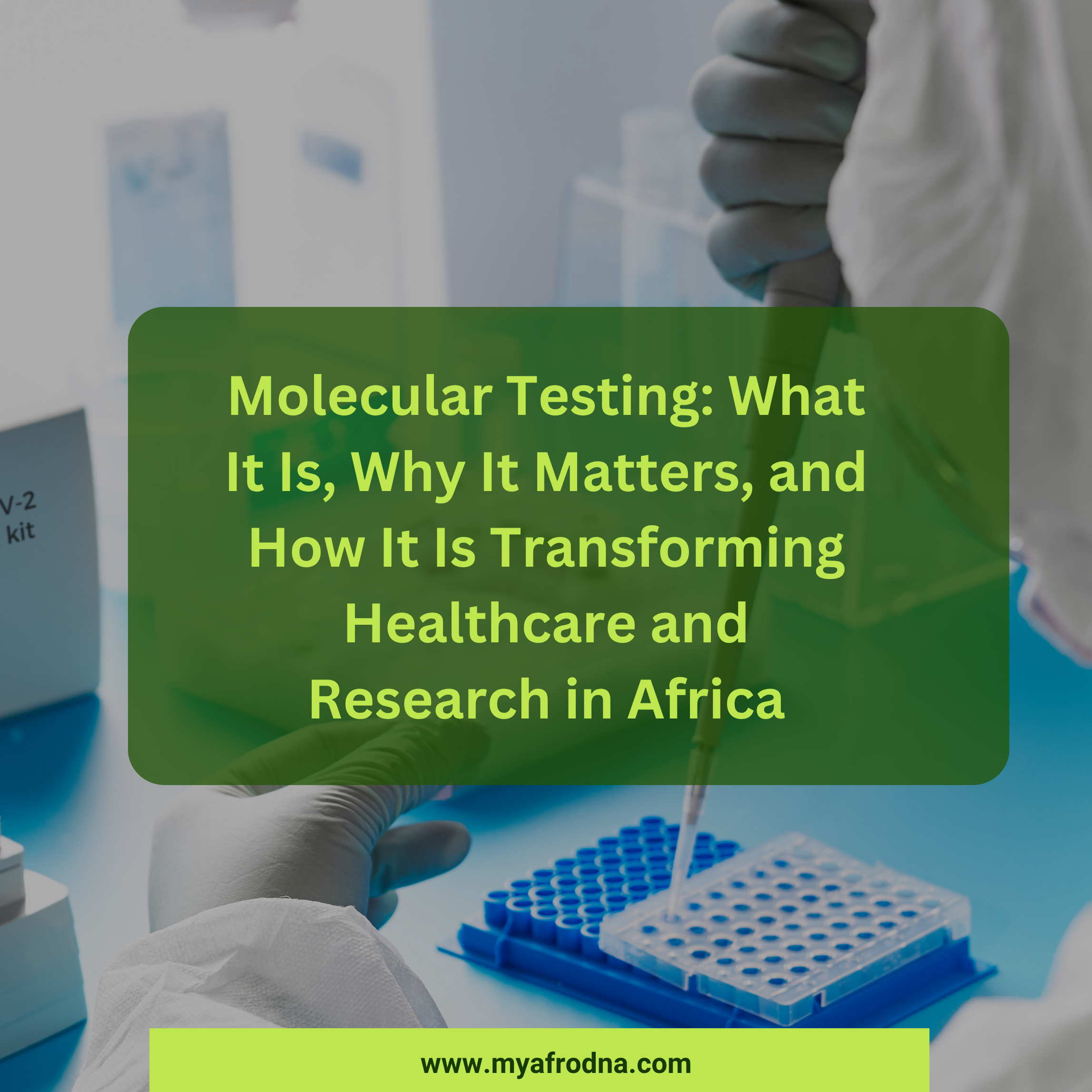
In recent years, molecular testing has become one of the most important tools in modern medicine and scientific research. From identifying infectious diseases and supporting cancer diagnosis to advancing agricultural innovation and genomic research, molecular testing is changing how we understand biology and make informed decisions.


Yet despite its growing importance, many people are still unfamiliar with what molecular testing actually involves or how it benefits healthcare, research, and industry.


At MyAfroDNA, we provide high-quality molecular testing services that support researchers, healthcare institutions, universities, biotechnology companies, and other organizations seeking accurate and reliable laboratory results. Our goal is not only to deliver dependable testing services but also to contribute to scientific advancement across Africa.


What Is Molecular Testing?


Molecular testing is a laboratory method used to detect specific genetic material—DNA or RNA—or other molecular markers within a biological sample. Unlike traditional laboratory tests that often rely on observing physical characteristics or culturing microorganisms, molecular testing examines biological material at the molecular level.


This approach allows scientists and healthcare professionals to detect diseases earlier, identify pathogens with greater precision, study genetic variations, and generate data that supports research and clinical decision-making.


Depending on the purpose of the analysis, molecular testing may involve samples such as blood, saliva, tissue, swabs, plant material, microbial cultures, environmental samples, or other biological specimens.


Why Molecular Testing Matters


The ability to detect biological changes at the molecular level has transformed healthcare and scientific research worldwide.


For healthcare providers, molecular testing can improve diagnostic accuracy and help guide treatment decisions. For researchers, it provides valuable insights into genetics, infectious diseases, biodiversity, agriculture, and environmental health.


Some of the major benefits include:


High analytical accuracy
Faster identification of pathogens and genetic markers
Improved disease surveillance
Support for precision medicine
Reliable data for scientific research
Better public health interventions


As African countries continue investing in research capacity and biotechnology infrastructure, molecular testing will play an increasingly important role in addressing local and global challenges.


Applications of Molecular Testing


Molecular testing is used across many sectors, extending well beyond hospitals and medical laboratories.


Healthcare and Clinical Diagnostics


Healthcare professionals use molecular testing to identify infectious diseases, detect inherited genetic conditions, monitor treatment responses, and support personalized medicine.


By identifying diseases at the molecular level, clinicians can make more informed decisions and provide targeted care.


Biomedical Research


Researchers rely on molecular testing to understand gene function, investigate disease mechanisms, and evaluate biological processes.


The data generated through molecular analysis contributes to publications, clinical studies, innovation, and scientific discovery.


Public Health


Public health agencies use molecular testing to monitor outbreaks, track disease transmission, identify emerging pathogens, and strengthen surveillance systems.


Rapid and accurate molecular analysis helps health authorities respond more effectively during public health emergencies.


Agriculture and Food Systems


Molecular testing supports crop improvement, livestock research, plant disease diagnosis, and food safety initiatives.


Researchers can identify pathogens affecting crops, verify species identity, and support breeding programs that improve agricultural productivity.


Environmental and Conservation Research


Scientists also use molecular techniques to study biodiversity, monitor ecosystems, identify species, and support conservation efforts.


These applications contribute to environmental protection and sustainable resource management.


Common Molecular Testing Techniques


Different laboratory methods are used depending on the objectives of the project.


Polymerase Chain Reaction (PCR)


PCR is one of the most widely used molecular techniques. It amplifies small amounts of DNA, allowing scientists to detect specific genetic sequences with high sensitivity.


PCR is commonly used in infectious disease testing, pathogen detection, genetic research, and many other laboratory applications.


Real-Time PCR (qPCR)


Real-time PCR not only detects DNA but also measures the amount of genetic material present within a sample.


This technique is valuable for quantitative analysis, gene expression studies, and clinical diagnostics.


DNA Sequencing


DNA sequencing determines the precise order of nucleotides within DNA molecules.


Sequencing enables researchers to study genetic variation, identify mutations, characterize microorganisms, and investigate biological diversity.


Genotyping


Genotyping examines specific genetic differences among individuals or populations.


It is widely used in medical research, population genetics, pharmacogenomics, and agricultural science.


The Importance of Accuracy in Molecular Testing


Reliable laboratory results depend on more than sophisticated equipment.


Accuracy begins with proper sample collection and continues through every stage of laboratory processing.


Quality molecular testing requires:


Appropriate sample handling
Standardized laboratory protocols
Validated testing methods
Quality assurance procedures
Skilled laboratory personnel
Proper interpretation of results


Each step contributes to producing dependable data that researchers and healthcare professionals can trust.


Supporting Scientific Research Across Africa


Africa possesses the world's greatest human genetic diversity, making the continent uniquely important for genomic research.


However, African researchers have historically faced limited access to advanced molecular laboratory services.


Expanding local molecular testing capacity helps strengthen research institutions, improve public health, support innovation, and reduce dependence on overseas laboratories.


By investing in molecular science within Africa, researchers can generate locally relevant data while building sustainable scientific infrastructure.


Molecular Testing at MyAfroDNA


At MyAfroDNA, we support organizations and researchers through a range of molecular laboratory services designed to meet international scientific standards.


Our laboratory works with researchers, universities, healthcare institutions, biotechnology organizations, conservation projects, and industry partners requiring dependable molecular analysis.


Our services support applications such as:


Molecular biology research
Pathogen identification
DNA extraction
PCR-based analysis
DNA sequencing
Species identification
Genetic research
Biospecimen processing
Laboratory consultation


Every project is approached with scientific rigor, attention to quality, and respect for client confidentiality.


Selecting a molecular laboratory is an important decision.


Choosing the Right Molecular Testing Partner


When evaluating a laboratory, consider the following:


Scientific expertise: Does the laboratory have experienced molecular scientists?


Quality systems: Are standardized laboratory procedures and quality assurance measures in place?


Technology: Does the laboratory use modern molecular techniques appropriate for your project?


Communication: Will you receive clear guidance before, during, and after testing?


Project support: Can the laboratory provide technical expertise for both routine and specialized analyses?


Working with an experienced laboratory helps ensure reliable results while supporting successful research outcomes.


The Future of Molecular Testing in Africa


The demand for molecular testing continues to grow across healthcare, agriculture, environmental science, and biotechnology.


Advances in genomics, artificial intelligence, precision medicine, and molecular diagnostics will create new opportunities for researchers, healthcare professionals, and policymakers.


As investment in African science continues to increase, local laboratories will play an increasingly important role in generating high-quality data that addresses regional priorities and contributes to global knowledge.


At MyAfroDNA, we are committed to being part of that future by supporting scientific excellence, expanding access to molecular laboratory services, and contributing to research that improves lives across Africa.


Looking Ahead


Molecular testing has become an essential component of modern science. Its applications span healthcare, research, agriculture, conservation, and public health, providing insights that were once impossible to obtain.


Whether advancing biomedical discovery, supporting disease surveillance, or enabling innovative research, molecular testing continues to shape the future of science.


At MyAfroDNA, we are proud to support this progress through reliable molecular laboratory services, scientific expertise, and a commitment to quality.


If your institution, research team, or organization requires molecular testing services or would like to discuss a research project, our team is ready to help you identify the most appropriate laboratory solutions for your needs.


Africa is home to the greatest human genetic diversity on Earth, yet African populations remain significantly underrepresented in global genomic research.


A groundbreaking study led by researchers across nine African countries is helping to change that narrative. The project has successfully added more than 1,000 newly sequenced African genomes to global scientific databases, creating one of the most significant expansions of African genomic data in recent years.


The initiative is expected to reveal millions of previously undocumented genetic variants, offering new insights into disease susceptibility, treatment response, and population health. These discoveries could play a critical role in advancing precision medicine, ensuring that healthcare solutions are better tailored to people of African ancestry.


Why does this matter?


Most genomic studies have historically focused on populations of European descent. As a result, diagnostic tools, risk prediction models, and treatment strategies may not fully reflect the genetic realities of African populations.


By increasing African representation in genomic databases, researchers can improve our understanding of conditions such as cancer, diabetes, cardiovascular diseases, and rare genetic disorders. This knowledge has the potential to transform healthcare outcomes not only for Africans but for people around the world.


At MyAfroDNA, we believe that African genomes hold the key to unlocking more inclusive and effective healthcare solutions. Studies like this reinforce the importance of investing in African-led genomics research and building datasets that truly reflect the diversity of our continent.


Read the full study coverage through the link below and discover how African genomics is shaping the future of global health.


Read more here


The World Health Organization (WHO) has declared the ongoing Ebola outbreak in the Democratic Republic of the Congo (DRC) and Uganda a Public Health Emergency of International Concern (PHEIC), the highest level of global health alert under international health regulations. The declaration follows the rapid spread of Ebola disease caused by the Bundibugyo virus, a rare strain for which there is currently no approved vaccine or specific treatment.According to WHO, the outbreak was officially declared in the DRC on 15 May 2026. By 16 May, health authorities had reported hundreds of suspected cases and dozens of deaths across several health zones in Ituri Province. Uganda also confirmed imported cases linked to travel from the DRC, raising concerns about cross-border transmission.


What makes this outbreak particularly concerning is the virus strain involved. While previous Ebola outbreaks have benefited from licensed vaccines and targeted therapies, the Bundibugyo strain currently lacks approved medical countermeasures. Scientists and global health organizations are now accelerating clinical trials for experimental vaccines and treatments in an effort to contain the outbreak.The WHO's emergency declaration is intended to mobilize international resources, strengthen surveillance, improve laboratory testing, and support affected countries in controlling the spread of the disease.


The outbreak is occurring in a challenging environment marked by insecurity, population movement, and limited healthcare access, factors that complicate contact tracing and response efforts.Despite the seriousness of the situation, WHO currently assesses the global risk as low, while rating the national risk in the DRC as very high and the regional risk as high. The organization has advised against travel and trade restrictions, emphasizing that evidence-based public health measures remain the most effective response.The outbreak highlights the ongoing need for investment in infectious disease surveillance, genomic monitoring, vaccine research, and global health preparedness. As researchers work to develop effective interventions against the Bundibugyo virus, the situation serves as a reminder that emerging infectious diseases remain a significant challenge for global public health.


Read more about the Ebola outbreak here: https://www.who.int/news/item/17-05-2026-epidemic-of-ebola-disease-in-the-democratic-republic-of-the-congo-and-uganda-determined-a-public-health-emergency-of-international-concern


A new frontier in cancer treatment may be emerging—not through injections or surgery, but through something as simple as breathing. Recent developments highlighted by New Scientist report that the first-ever inhalable gene therapy for cancer has been fast-tracked by the U.S. Food and Drug Administration (FDA), marking a significant shift in how gene therapies can be delivered and applied.


The therapy, currently under investigation for lung cancer, works by delivering immune-boosting genes directly into lung cells via inhalation. Instead of circulating through the bloodstream like conventional treatments, the therapy is administered as a fine mist using a nebulizer. This allows it to act locally within the lungs—targeting tumours more directly and potentially reducing systemic side effects.


At the core of this innovation is a modified viral vector, engineered to safely transport genetic material into cells. Once inside, these genes instruct the cells to produce proteins—specifically immune signaling molecules—that help the body recognize and attack cancer. Early findings suggest that this approach can shrink tumours or stop their growth in some patients, particularly those who have exhausted other treatment options.


This therapy has received what is known as a Regenerative Medicine Advanced Therapy (RMAT) designation from the FDA. This designation is reserved for treatments that show early promise in addressing serious or life-threatening conditions and allows for an accelerated development and review process.


One of the most compelling aspects of inhalable gene therapy is its precision. Traditional cancer treatments often struggle to reach sufficient concentrations in the lungs without affecting other parts of the body. By delivering therapy directly to the site of disease, this approach may enhance effectiveness while minimizing harm.


However, the science is still in its early stages. Initial trials have involved small patient groups, and while results are promising, larger clinical studies are needed to confirm safety, effectiveness, and long-term outcomes. Current research is also exploring how this therapy might work in combination with existing treatments such as chemotherapy and immunotherapy.


Beyond the immediate implications for lung cancer, this development signals a broader shift in biotechnology: moving from generalized treatment approaches to highly targeted, localized, and genetically informed interventions.


For regions like Africa, where access to advanced therapies remains uneven—this raises important questions about inclusion, infrastructure, and representation in genomic research. As gene-based therapies evolve, ensuring that diverse populations are included in research and data collection will be critical to making these innovations truly global.


At MyAfroDNA, this moment reinforces a core truth: the future of medicine is being written in our DNA. And who is represented in that data will determine who benefits from the breakthroughs ahead.


Read more here


1 2 3 … 6